
- Claude Security is now in public beta for Claude Enterprise customers
- Team and Max customers are expected to receive access very soon
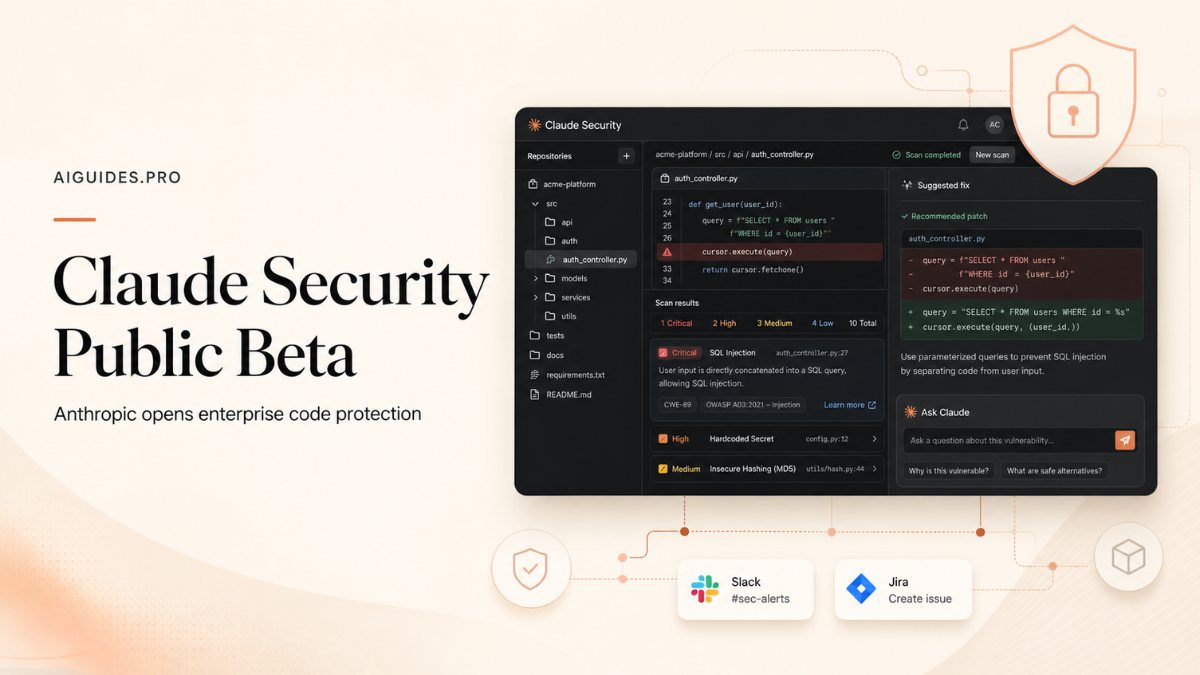
- It scans codebases, validates findings, and suggests targeted security patches
- Webhooks can send alerts into Slack, Jira, and similar tools
- Security partners are adding Opus 4.7 capabilities into existing tools
- Project Glasswing uses Mythos Preview for selected defensive security work
Anthropic has opened Claude Security public beta for Claude Enterprise customers. The tool is built to scan software code for security risks. It can validate findings, suggest patches, and support developer review.
Claude Security was previously tested through a limited research preview. Anthropic says hundreds of organizations used it before this wider beta. The launch gives enterprise teams another way to check production code. It also shows how AI coding tools are moving into security work.
Claude Security does not simply flag possible bugs. It also creates proposed fixes that developers can review before approval. That review step is important for security teams. AI guides the path to find risks, but people still control final changes.
What Claude Security Does
Claude Security scans codebases for possible software vulnerabilities. It looks for issues that could expose systems, data, or users. After finding a possible weakness, it checks whether the issue is valid. This validation step can help reduce noisy security alerts.
The tool can then suggest a targeted patch. Developers can inspect that patch before merging anything into production code. This makes Claude Security more than a basic scanner. It acts more like a security review assistant for engineering teams.
Security teams often face long queues of scanner alerts. A tool that explains risk and suggests fixes can save review time. Still, Claude Security should not replace manual security review. Its best role is helping teams work faster and more carefully.
What The Public Beta Adds
The public beta brings features built for enterprise workflows. Teams can now run scheduled scans across selected code repositories. They can also target specific folders, paths, services, or modules. This helps teams focus on sensitive parts of large codebases.
Claude Security also supports exports in CSV and Markdown formats. These reports can help during audits, reviews, and internal planning.
Webhook support is another useful part of the beta. Alerts can be sent into Slack, Jira, and other connected tools. That means findings can reach the teams already handling security tasks. Developers do not need to check a separate place each time.
The beta also includes persistent dismissals for repeated findings. Once teams dismiss an issue, that choice can carry forward.
Why This Matters For Enterprise Teams
Large companies often manage many codebases at the same time. Manual review across every repository is difficult and slow.
Traditional security scanners can help, but they often create alert noise. Security teams then spend time deciding what is real.
Claude Security tries to reduce that friction. It validates issues and gives developers a clearer repair path. This could help teams fix risks earlier in development. It may also reduce delays between detection and patch approval.
For engineering leaders, the value is practical. Faster triage can support safer releases and fewer missed defects.
For security leaders, the main question is trust. Any AI-generated fix still needs careful review before deployment.
Availability For Claude Users
Claude Security is available first to Claude Enterprise customers. Anthropic says Team and Max customers will get access soon. That detail matters for smaller teams watching this launch, and the product is not limited to Enterprise forever.
For now, Enterprise customers get the public beta first. This gives Anthropic a controlled path for larger production environments.
As access expands, more teams may test AI-assisted code security. Adoption will depend on accuracy, review quality, and team policies.
Anthropic Is Also Working Through Security Partners
Claude Security is only one part of Anthropic’s security push. The company is also working with major security technology partners.
Technology partners include CrowdStrike, Microsoft Security, Palo Alto Networks, SentinelOne, TrendAI, and Wiz. These companies are adding Claude Opus 4.7 capabilities into security products. That could place Claude inside tools teams already use.
Services partners are also part of the rollout. Accenture, BCG, Deloitte, Infosys, and PwC are helping deploy Claude-based security solutions. This partner strategy could matter for large organizations. Many enterprises already depend on these vendors for security operations.
Instead of changing their full stack, teams may add Claude through partners. That could make adoption easier for cautious security buyers.
Project Glasswing and Claude Opus 4.7
Claude Security is connected to a larger cybersecurity effort at Anthropic. One related program is Project Glasswing. It focuses on protecting critical software and infrastructure. It uses Claude Mythos Preview for selected defensive security work.
Mythos Preview is more restricted than Claude Security’s model access. Anthropic is using it with selected partners for high-impact defense.
Claude Security is different because it uses Claude Opus 4.7, Anthropic’s recent model for advanced coding work. That distinction is important for readers.
Mythos Preview is restricted, while Claude Security targets broader enterprise use.
What This Means For AI Security Tools
Claude Security arrives as software teams adopt AI coding tools quickly. That shift creates both productivity gains and security concerns.
If AI can help write code, it can also help inspect code. Anthropic is now pushing that idea into enterprise security workflows.
The product’s success will depend on real-world performance. It must handle messy repositories, unclear logic, and complex dependencies. It also must avoid producing risky patches. A fast fix is not useful if it creates another problem.
Human approval remains the safest path for now. Claude Security can assist, but teams still need ownership and review.
What Comes Next
Claude Security will now be tested by Enterprise customers in public beta. Anthropic says access for Team and Max customers is expected soon.
The wider test will show how well the tool performs on real codebases. It will also test whether teams trust AI-suggested patches in security workflows.
For Anthropic, the launch expands Claude beyond coding assistance. It places the model directly inside enterprise software defense.




Add your first comment to this post